

7 Ways PG, Hostel and Co-Living Owners Lose Money Without Realizing It
Occupancy is only one piece of profitability. Small operational leaks — vacant beds, rent delays, preventable move-outs — can cost lakhs every year across PGs, hostels, and co-living spaces.
Updated
The leak you cannot see
You watch occupancy. You chase rent. But five empty beds at ₹8,000 each, ten late payments, three preventable move-outs, and utility gaps you never reconciled — together that is lakhs per year gone. Not from one disaster. From small inefficiencies you stopped noticing.
When PG, hostel, and co-living owners think about profitability, they usually focus on one thing: occupancy. More occupied beds mean more revenue. That is true — but occupancy is only one piece of the puzzle.
Many shared accommodations lose significant money every month without noticing it. The losses do not come from major disasters. They come from small operational inefficiencies that slowly drain revenue over time.
Individually, these issues seem minor. Combined, they can cost lakhs of rupees every year — whether you run a boys PG, a student hostel, or a co-living space.
Here are seven of the most common ways accommodation operators lose money without realizing it — and what to do about each one.
1. Empty beds that stay empty for too long
An empty bed is more expensive than most owners calculate.
| Vacant beds | Rent/bed | Lost/month | Lost/year |
|---|---|---|---|
| 5 beds | ₹8,000 | ₹40,000 | ₹4,80,000 |
| 3 beds | ₹8,000 | ₹24,000 | ₹2,88,000 |
| 10 beds (100-bed property) | ₹8,000 | ₹80,000 | ₹9,60,000 |
The biggest issue: many operators do not actively track vacancies, upcoming move-outs, or occupancy trends. Beds stay empty longer than necessary because nobody knew they were empty — or marketing started too late.
Fix the leak
Track occupancy at bed level daily, not monthly. Know who is moving out in the next 30 days and start filling beds before they go empty. Read: Why some PG owners stay full and How to track PG occupancy.
2. Rent collection delays
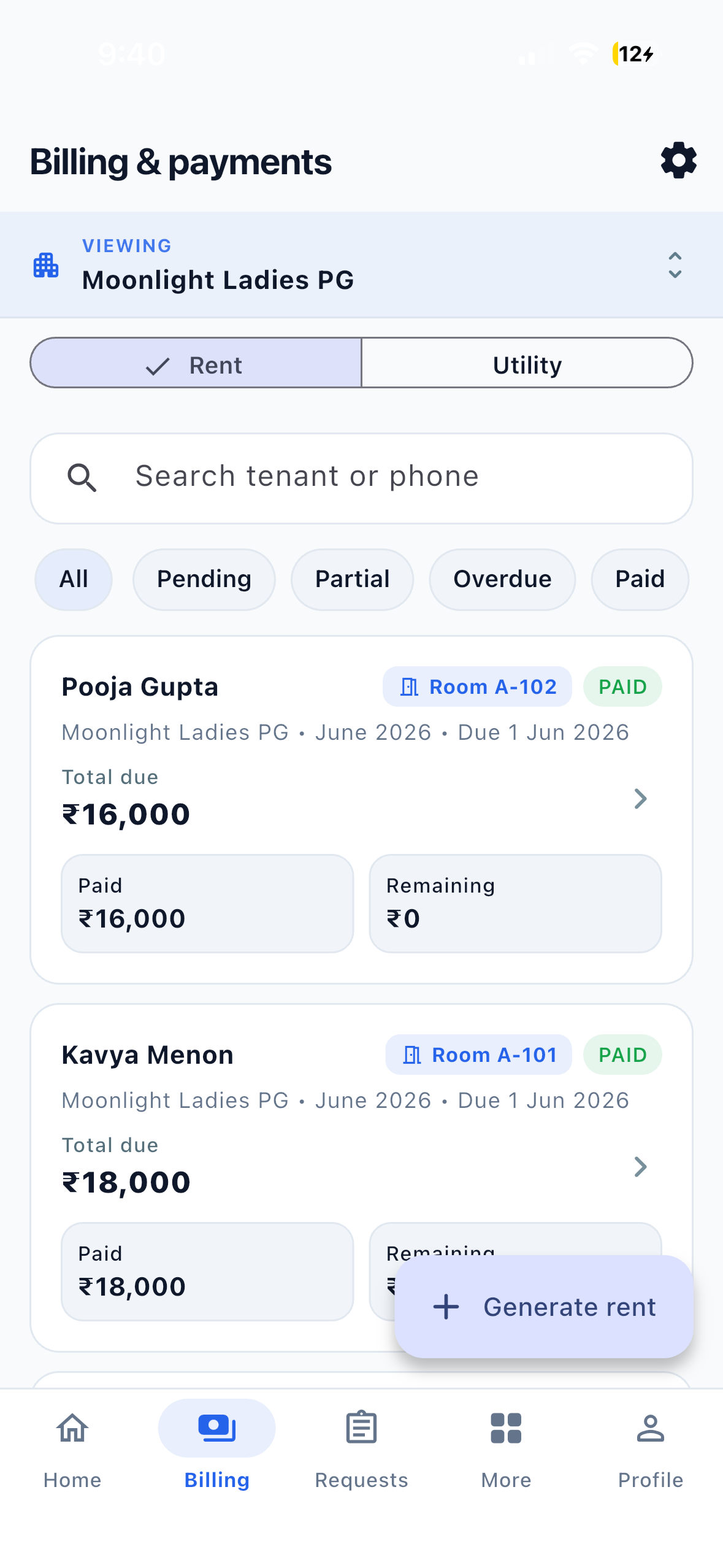
Most operators expect occasional late payments. The problem starts when delays become normal — across dozens or hundreds of residents in a PG, hostel, or co-living property.
- Cash-flow gaps when half the property pays after the 15th
- Hours spent on WhatsApp follow-ups every month
- Administrative work verifying UPI screenshots
- Accounting confusion when records do not match reality
Time is a cost
Work it out with your own numbers: five hours a month on rent admin, valued at ₹500 an hour, is ₹2,500 a month or ₹30,000 a year — before counting rent that arrives late. That is a worked example, not a measurement, and the point is the size of the hours rather than the size of the rupee figure.
Deep dive: The hidden cost of chasing rent every month.
3. Tenants leaving for preventable reasons
One of the most expensive mistakes: focusing entirely on acquiring new residents while ignoring existing ones.
Many move-outs happen because of solvable issues:
- Maintenance delays — geyser, Wi-Fi, water unresolved for days
- Poor communication — rent disputes, notice missed, no response channel
- Repeated unresolved complaints
- Security or visitor policy confusion
- Slow staff response when tenants need help
Replacing a tenant is almost always more expensive than retaining one. Every preventable move-out creates vacancy risk, marketing cost, move-in admin, and weeks of lost rent.
The retention math
Every extra month a tenant stays is a month you do not pay for a vacancy gap, a listing, or move-in admin — and the bed keeps earning at whatever your rent is. Retention is a revenue strategy, not a soft metric.
4. Utility leakage
Utilities are among the largest operational expenses in PGs, hostels, and co-living spaces. Yet many operators lack visibility into electricity consumption, water usage, shared utility allocation, and outstanding utility dues.
Without proper tracking:
- Electricity bills are split evenly when usage is uneven
- Meter readings are recorded late or not at all
- Utility charges are disputed because they are not documented
- Outstanding utility dues accumulate without follow-up
Small inaccuracies repeated every month become substantial losses over a year — especially in properties with 50+ beds and shared meters.
Fix the leak
Bundle utilities into rent statements with meter readings and per-unit rates documented. When charges are transparent, disputes drop — and you recover what residents actually owe.
5. Staff inefficiencies
As properties grow, owners rely on managers, wardens, accountants, and support staff. The challenge is usually not staff capability — it is visibility and workflow.

- Tasks get duplicated — two people follow up on the same rent payment
- Responsibilities blur — complaints fall between warden and manager
- Follow-ups are missed — visitor approvals, move-outs, custody items
- Owners become operational bottlenecks — answering the same questions all day
Many businesses lose productivity not because people work less, but because systems are missing. Role-based permissions and structured workflows let staff act without forwarding every screenshot to the owner.
6. Poor complaint management
Complaints are often treated as operational noise. In reality, they are early warning signals.
A complaint ignored today often becomes a negative review tomorrow, a move-out next month, and a vacancy shortly after.
- Tenant reports geyser issue on WhatsApp — message buried
- No status update for three days — tenant frustrated
- Tenant searches for another PG, hostel, or co-living option
- Move-out request submitted — bed goes empty
- Revenue lost for weeks while filling the bed again
Successful operators do not view complaints as problems to tolerate. They view them as retention opportunities. The faster issues are tracked, assigned, and resolved, the lower the risk of losing residents.
Related: 5 signs your PG has outgrown WhatsApp.
7. Making decisions without data
Many accommodation businesses still run on assumptions. These questions should have immediate answers:
- Which property performs best this month?
- What is the occupancy trend — up or down?
- Which rooms or floors have the highest turnover?
- How much rent is outstanding right now?
- How many move-outs are scheduled in the next 30 days?
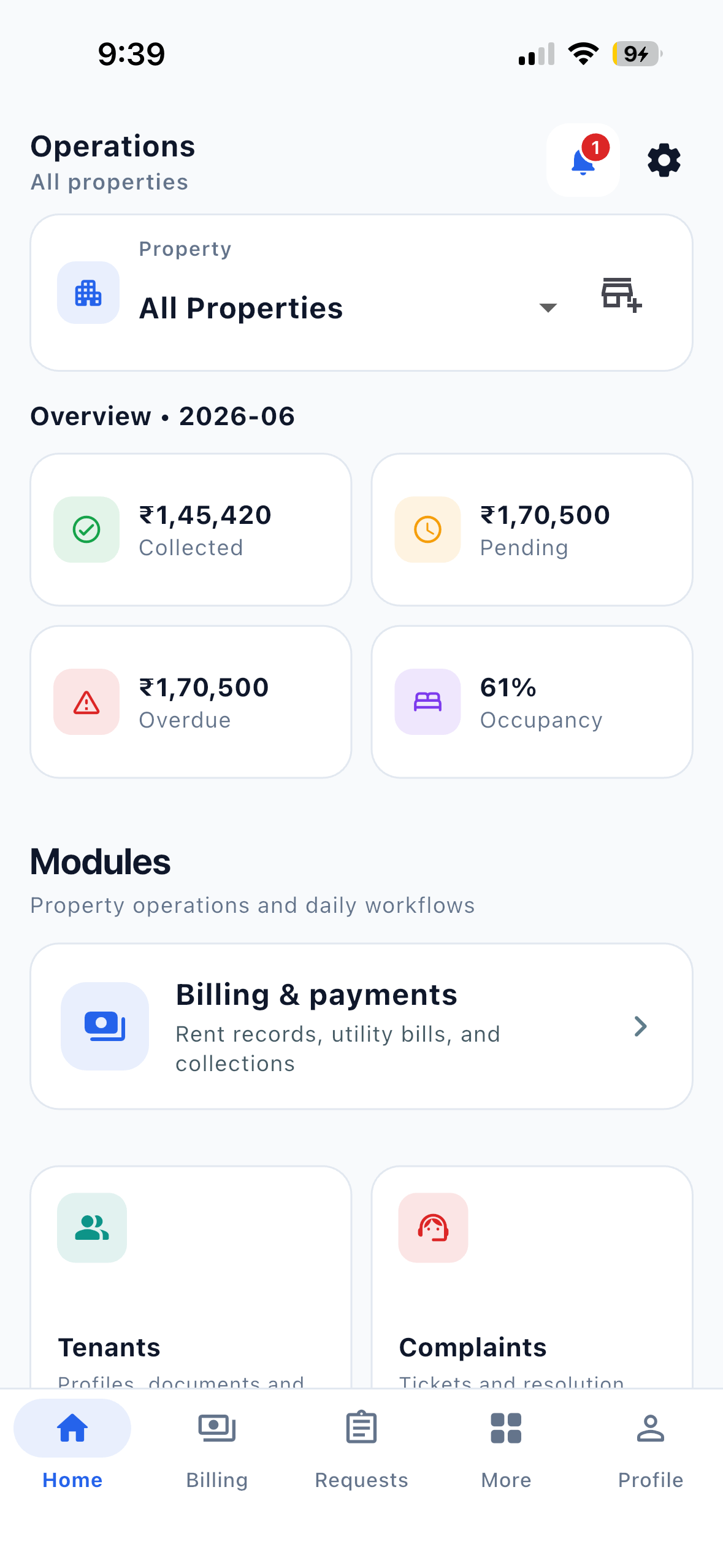
In too many properties, this information is scattered across Excel files, WhatsApp chats, notebooks, and staff phones. Decisions based on incomplete information miss revenue opportunities every week.
Related: PG management app vs Excel.
The surprising truth
Most accommodation businesses do not fail because of one big mistake. They lose profitability through hundreds of small inefficiencies:
- A delayed complaint
- A forgotten rent follow-up
- A vacant bed nobody marketed
- An unpaid utility charge never reconciled
- A missing record when the accountant asks
Individually insignificant. Together, a system that leaks revenue every day.
Seven leaks, seven fixes — at a glance
| Money leak | What it costs you | What fixes it |
|---|---|---|
| Empty beds too long | ₹4,80,000+/year on 5 beds | Bed-level occupancy + early move-out tracking |
| Rent collection delays | Time + missed payments | Structured billing + payment proof workflow |
| Preventable move-outs | Vacancy + marketing + admin | Fast complaint resolution + retention focus |
| Utility leakage | Slow monthly bleed | Meter readings + bundled utility statements |
| Staff inefficiencies | Owner as bottleneck | Role-based permissions + clear workflows |
| Poor complaint handling | Move-outs you could prevent | Ticket system with status and photos |
| Decisions without data | Missed opportunities | Centralized reports + live dashboards |
What successful operators do differently
High-performing PG, hostel, and co-living operators focus on visibility. They know occupancy rates, vacant beds, upcoming move-outs, outstanding payments, complaint status, and property performance — without calling three people or opening five files.
Because they can see what is happening, they fix problems before those problems become losses.
Final thoughts
Profitability is not determined only by how much rent you charge. It is determined by how efficiently you operate.
The most successful accommodation operators understand that revenue growth and operational discipline go hand in hand. By reducing vacancies, improving rent collection, retaining residents, managing utilities, and tracking performance, you can significantly improve profitability — without adding a single new bed.
EasyAavaas helps PGs, hostels, and co-living spaces manage occupancy, rent, complaints, visitors, staff workflows, and reporting from one platform — giving operators the visibility to reduce revenue leakage and run more efficiently. Free for owners, managers, and tenants.
For the full operational playbook, see The complete guide to running a PG, hostel or co-living space in India.
Turn a cost concern into a checked scenario
Separate billed rent from received cash and refundable deposits from operating income. Use the operating cost guide and cash planning calculator with your own assumptions. Keep a monthly rent register for confirmed charges and payments.