
PG vs Co-Living: The Difference for Owners Choosing a Model
A PG and a co-living space differ in tenants, rent packaging, services and staffing. Here is how owners can compare them, reposition an existing PG, and check whether the software needs to change.
The short answer
A PG and a co-living space both rent shared-living beds or rooms, so the day-to-day records look similar. The difference is the promise to residents: a PG is usually a local, owner-run home with meals and a caretaker, while co-living is usually a branded product with private and shared rooms, amenities and a community. Decide which promise you can keep before you change rent, furnishing or software.
Definitions: what each model usually means
PG (paying guest accommodation)
A PG is shared accommodation rented to individuals, usually for a monthly stay. It is often run by a local owner or a family, with a caretaker or warden, and meals or basic house services are commonly part of the culture. Residents are often students or working people who want a simple, affordable room close to work or college.
Co-living
Co-living is branded shared living, usually in a purpose-built or fully managed building. It typically offers private and shared rooms, common areas, Wi-Fi and housekeeping as standard, and organised community events. Residents are often professionals who value flexibility, and the operator runs the property with a defined team and house rules.
PG vs co-living side by side
The table below describes common patterns, not rules. Practices vary by city, building age and operator, so use it as a checklist for your own property rather than a market benchmark.
| Factor | PG | Co-living |
|---|---|---|
| Typical resident | Students and early-career workers; often local to the city or new to it | Working professionals and remote workers; often relocating for a job |
| Rent level | Often lower per bed, with a simpler package | Often higher per bed, because amenities and services are part of the price |
| Sharing pattern | Mostly shared rooms (double, triple or more), with some single rooms | A mix of private and shared rooms, sometimes with an attached bathroom |
| Services expected | Basic cleaning, water, power backup and sometimes meals | Wi-Fi, housekeeping on a set schedule, common areas and community activities |
| Deposit norms | Often one month of rent or an agreed fixed amount, refunded at checkout after deductions for damage | Often a deposit plus a notice period; the terms are set out in the resident agreement |
| Turnover (churn) | Residents often stay for longer periods, though this depends on the location and the college or job cycle | Stays are often shorter and more flexible, so move-ins and move-outs are more frequent |
| Staffing | Often an owner with one caretaker or warden; the owner handles most tasks | A defined team for operations, housekeeping, community and complaints, sometimes across several buildings |
| Brand and community | Usually local reputation and word of mouth | Brand identity, listings on booking platforms and resident events |
If you reposition a PG as co-living
Repositioning changes what residents experience and what you promise them. It rarely changes the need for clean records. Decide the new offer first, then check what it costs to deliver it every month.
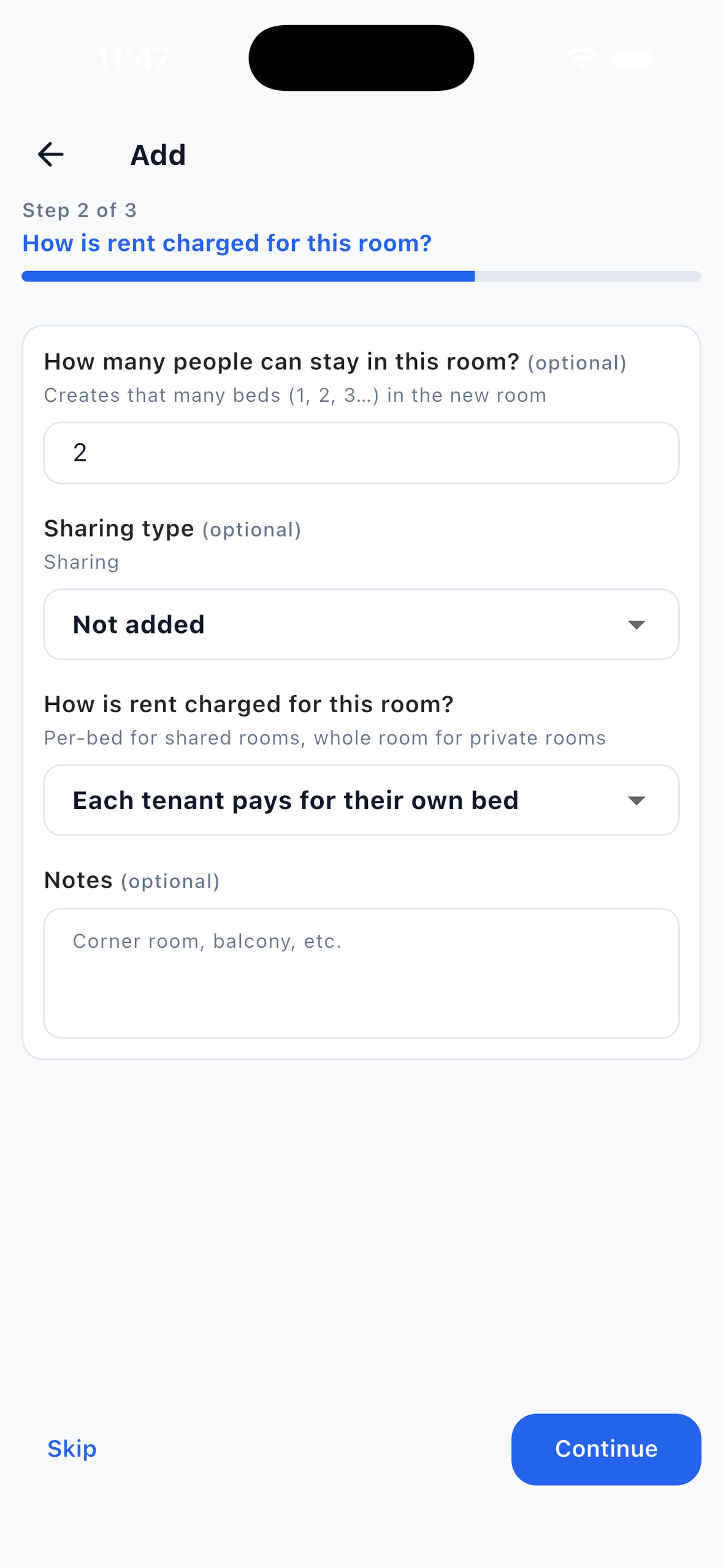
- Furnishing and room mix: you may add private rooms, upgrade beds or add storage, and you may need to re-check the room layout and sharing types you show in the app.
- Wi-Fi and utilities: a co-living promise usually means reliable Wi-Fi and a clear rule for how electricity is shared between residents.
- Housekeeping cadence: a fixed weekly schedule and a clear list of shared areas replace an informal "call the caretaker" approach.
- Community norms: house rules, guest policy, quiet hours and event participation should be written down and shared with every resident.
- Listings and pricing: a new name or package may change how you describe rent and what is included.
Illustrative example: a 12-bed PG keeps its existing bed count, converts two rooms into private rooms, adds a common lounge and moves to a weekly cleaning schedule for shared areas. Each bed still has one tenant, one rent record and one deposit record. Only the offer and the service list have changed.
Some things do not change when you reposition. Rent records still need to show who owes what for which month. Deposits still need to be recorded when received and when refunded. Complaints still need a date, an owner and a status. Occupancy still needs to match the beds that are really occupied. A co-living brand makes these records more visible to residents, so gaps show sooner.
Agreements and house rules also need a legal check for your city and tenant type. This guide explains operations and records; it does not give legal advice on licences or tenancy terms.
Does the management software differ?
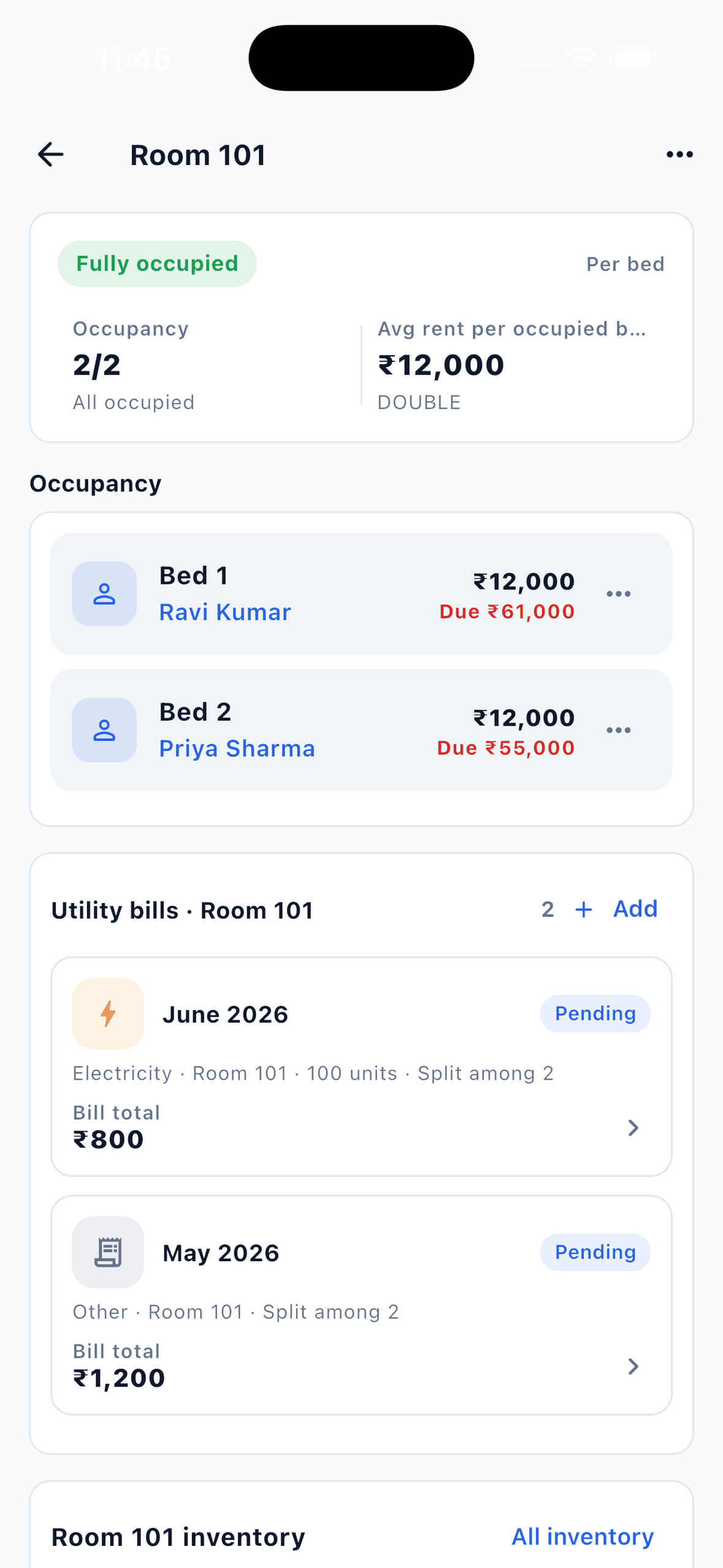
The core records are the same for a PG and a co-living space: floors, rooms and beds, tenants, rent, deposits, complaints, notices and team access. A co-living operator needs those records to be accurate for more residents, more move-ins and more shared rules, but the records themselves do not change shape. A bed is still a bed, and a rent entry is still a rent entry.
- Rooms and beds: floors, rooms and individual beds, with per-bed or whole-room billing for each room.
- Tenants and deposits: joining date, rent, deposit, documents and move-out checks before the deposit is settled.
- Rent and payment proof: monthly rent records, tenant payment proof with a UTR for owner review, and owner-recorded cash and UPI payments.
- Operations: complaints with photos and escalation, visitor requests, notices to all members and inventory issued to tenants.
- Team: owner, manager, warden, accountant, staff and support roles with per-person permissions.
EasyAavaas runs PG, hostel and co-living properties on the same records. The plan is ₹0 per month with no per-bed or per-property fee and no limit on beds, so the software cost does not change when you switch the model. Tenants still pay you directly by UPI, cash, bank transfer or another agreed method. EasyAavaas records the payment and the proof; it does not process or hold the money.
Software needs to change when the business needs more than records. A brand-scale co-living operator may need online booking, a payment gateway, listings on booking platforms or channel management. EasyAavaas does not include online booking, a payment gateway or public channel integrations. If those are central to your model, compare tools that cover them. The best co-living management software guide sets out the criteria to check.
Can I run a PG and a co-living under one account?
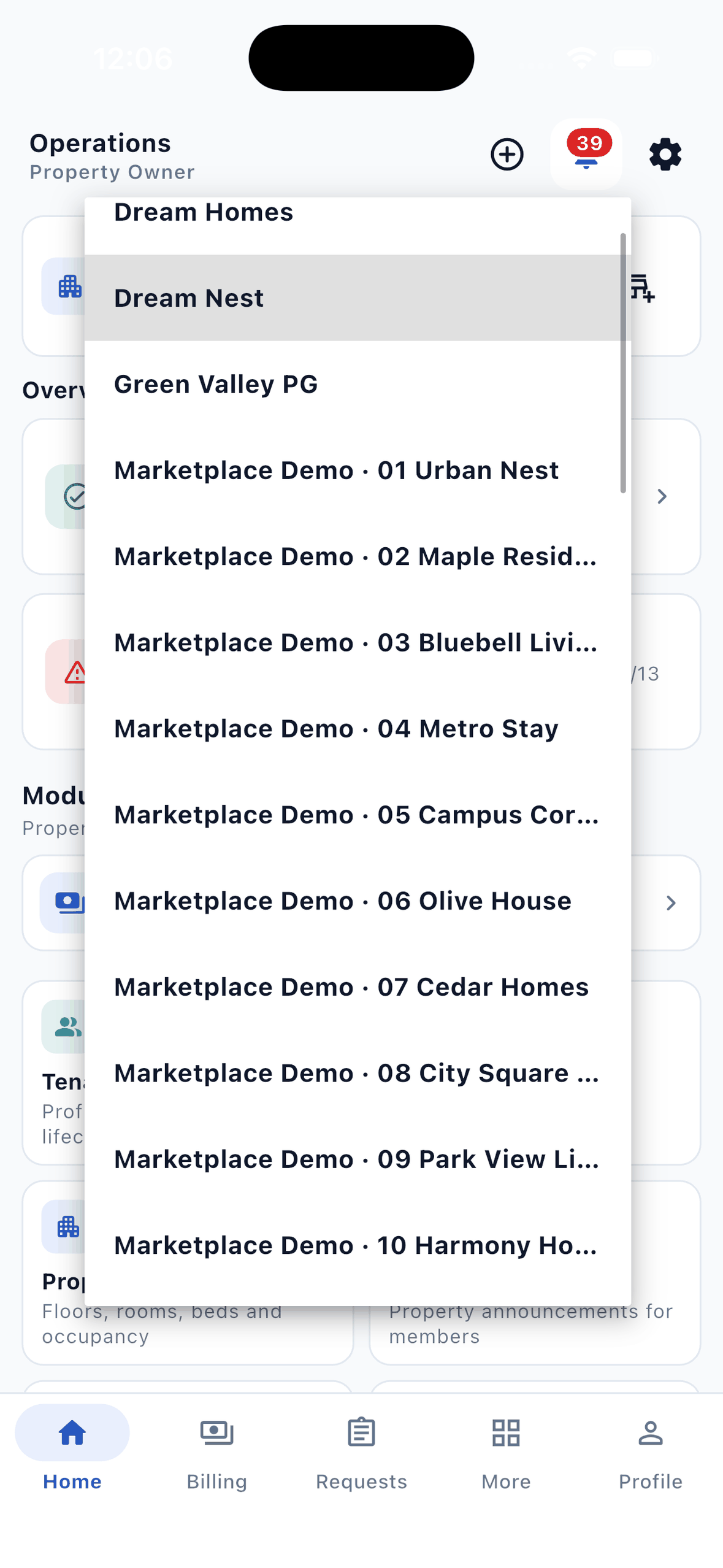
Yes. EasyAavaas supports several properties under one account, so a PG and a co-living space can sit side by side. Each property keeps its own rooms, beds, tenants and team access, and the owner can switch between them or view them together. This suits an owner who runs an older PG while opening a new co-living building, or who wants to test the new model in one property first. See multiple property management for how switching and access work.
How to choose which model to run
- Start with the resident you can serve well today: a student or worker who wants a simple, affordable room, or a professional who wants private space and services.
- Check the building: room sizes, bathrooms, power backup and Wi-Fi will decide how much private space you can offer.
- Price what you will deliver every month, including housekeeping, Wi-Fi and community activities, before you set a rent for the new offer.
- Decide who will run the property day to day, and whether one caretaker can handle it or you need a defined team.
- Test one change at a time, and keep the rent, deposit and complaint records the same for every bed throughout.
For a wider view of running any of these properties, see the PG management software overview and the co-living management software page. If you are still deciding whether to open a PG at all, the guide to starting a PG business in India covers the first steps.
EasyAavaas also has a free co-living management app guide that lists what a ₹0 tool must still cover for shared rent, turnover and notices.
Is co-living just a PG with a new name?
Not quite. The records are similar, but co-living usually means a branded product with private and shared rooms, standard amenities, a defined team and a community. A PG is more often a local, owner-run home with a simpler offer. Which label fits depends on what you actually deliver to residents.
Do I need to convert my PG to co-living to use EasyAavaas?
No. EasyAavaas handles PG, hostel and co-living properties with the same rooms, beds, tenant, rent and deposit records. The plan is ₹0 per month for any model.
Can I run a PG and a co-living under one account?
Yes. EasyAavaas supports several properties under one account, with each property keeping its own rooms, beds, tenants and team access. The owner can switch between properties or view them together.
Does the software price change between a PG and co-living?
No. The plan is ₹0 per month, with no per-bed fee, no per-property fee, no setup fee and no commission on rent. Tenants pay you directly, and EasyAavaas does not process or hold the money.
When do I need more than management software for co-living?
When booking, payments or listings are central to your business. EasyAavaas does not include online booking, a payment gateway or public channel integrations. For those needs, compare tools built for brand-scale co-living before you decide.